
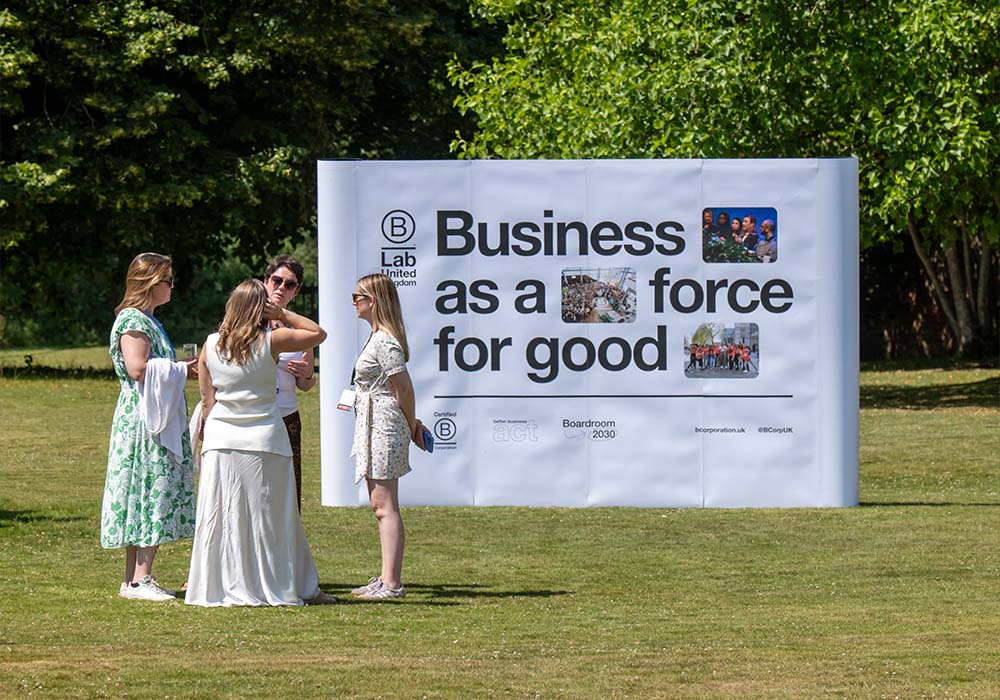
Today B Lab has announced the long-awaited (and long overdue) new B Corp Standards.
As a passionate believer in the power of business to create positive change, and an ardent proponent of the B Corp movement in three dimensions (leader of a certified B Corp, B Leader, and B Local Co-Chair), I’m thrilled to see this important update finally launched.
The change they represent is seismic and critical to both the credibility and survival of the B Corp brand.
In the world of corporate sustainability, what good looks like moves like lightning – and Version 6 has been in place since 2019, a light year in industry terms. So in our view Version 7 is aimed squarely at returning the B Corp certification the position of leadership in sustainability of certification standards; they are aligned with other ‘best practice’ frameworks and standards including the Corporate Sustainability Reporting Directive’s ESRS, the Doughnut Economics Action Lab’s (DEAL) Business Tool and the Future Fit Business Benchmark.
In our view the single most important change the update brings is the introduction of a new set of mandatory minimum requirements that all companies need to meet before certifying.
The B Corp movement has come under fire in the past couple of years, particularly here in the UK as its influence and reach has grown so significantly. Much of that criticism centres on the loopholes in the current standard (V6) that allow some companies to over-index on some aspects of social or environmental performance, whilst ignoring or underperforming on others. The existing Standards also lack the rigour and comparability other standards offer due to the twin factors of absence of minimum requirements, and unpublished Impact Business Model criteria.
According to Chris Turner, Director of B Lab UK, the ambition of the B Corp Movement is to see every business in the UK acting as a force for good by 2030. The new Standards not only addresses the above complaints by ‘raising the floor’, but they also bring a much-needed new emphasis on the integral role that Collective Action plays by raising the ceiling for all companies – both modelling and open-sourcing what good looks like.
But make no mistake – these new standards will be challenging for many businesses due to the increased stringency of requirements; the bar has been raised. And that is because they are designed to help businesses have an even greater impact where it matters most.
If you’re planning your first certification, or preparing for recertification, now’s a great time to start thinking about your next steps. At Fit for Purpose we’re already supporting clients through the changes — if you’d like to chat about what this could mean for your business, feel free to get in touch.